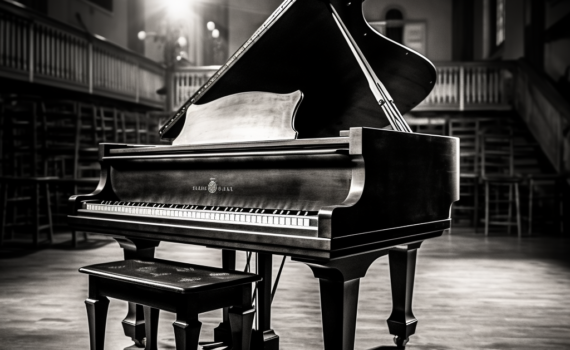
Dear readers, today, I invite you to join me on an intriguing journey, exploring an element of music that often goes unnoticed, yet remains central to the experience: silence. When we think of music, it is the notes, the melody, the rhythm that usually take center stage. But what about the silent interludes, the pauses, the breaks? Are they merely empty spaces, or do they hold a deeper significance? In music, silence is far from being an absence. It’s a powerful presence, an active participant that shapes the narrative of the composition. Pauses, in their seemingly contradictory role, serve to bring the notes, melodies, and harmonies to life. They provide room for the sound to breathe, the listener to reflect, and the music to resonate. The power of a well-placed pause is universal, reaching across various genres and styles. In classical music, composers like Ludwig van Beethoven were masters at […]
Rhythm
There’s a song for every mood, every occasion, and every heart. Have you ever wondered why a particular melody can bring a tear to your eye or a smile to your face? Why a certain rhythm can make your heart race or soothe your troubled mind? The connection between music and emotions is a fascinating orchestra of psychology, neurobiology, culture, and personal experience. Music, in its diverse forms, is a universal language of emotion. It transcends boundaries of culture, language, and time, tapping into our most primal emotional states. It has been a part of human society for millennia, serving as a means of communication, a form of expression, and a tool for social bonding. The science behind this emotional response to music is as intriguing as the phenomenon itself. Neurobiological research suggests that our brains are wired to associate music with emotions. When we listen to music, specific areas […]