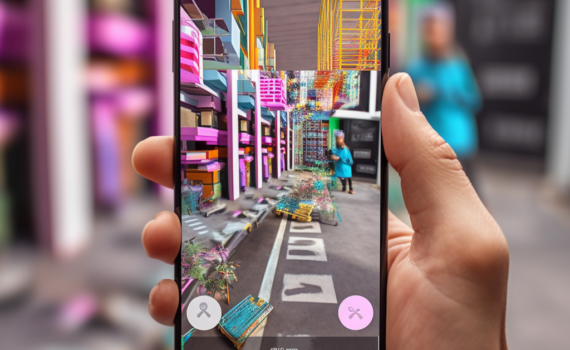
As a species, we’ve always been driven by an insatiable curiosity, a desire to push beyond the boundaries of our known world, to explore new dimensions and realities. Today, that frontier is not in the vast expanses of outer space, but in the digital landscapes of augmented reality (AR). AR is an intriguing blend of the real and the virtual. It overlays digital information – images, sounds, text – onto our physical world, enhancing our perception and interaction with our environment. Think of it as a digital layer that adds a wealth of information and interactivity to the world around us. The concept might seem like it was ripped from the pages of a science fiction novel, but it is no longer a mere figment of our imagination. It is here, and it’s transforming the way we live, work, and play. The journey of AR began in the early 1960s, […]
Percival's Musings
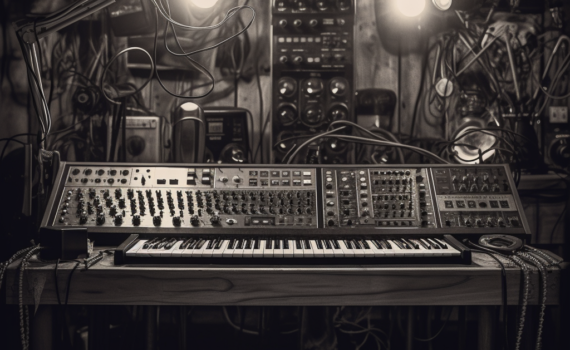
Greetings, kindred spirits! Percival here, once again embarking on a journey of discovery. Today, we turn the dial of our curiosity to a realm where science and art merge seamlessly — the fascinating world of electronic music. In the pre-digital era, the creation of music was largely bound by the physicality of instruments. The piano, the violin, the drum — they each offered a distinct voice, but their vocabulary was somewhat fixed. Then came along electronic music, a genre not tied to any physical instrument, and with it, the doors of musical experimentation were flung wide open. The birth of electronic music can be traced back to the late 19th and early 20th centuries, with inventors like Thaddeus Cahill and his groundbreaking Telharmonium, a gargantuan machine that used rotating generators to produce sound. But it was only in the post-WWII era that electronic music truly began to shape the musical […]