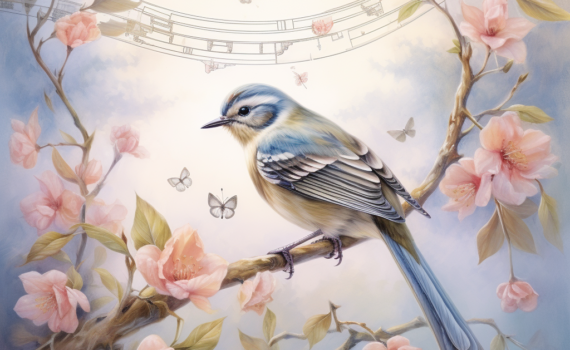
Greetings, my cherished seekers of knowledge and wonder! Percival Q. Higginbottom at your service once again. On this fine day, I invite you to join me in an exploration most delightful to the ears, as we tune into the melodious symphony of birdsong. Oh, what joy their harmonious refrains bring to our mornings! But, have you ever pondered the enigmatic language that these feathered maestros convey through their tuneful airs? Let us spread our wings and embark upon this quest of avian euphony. The avian kingdom, my fine companions, boasts an extraordinary array of vocal virtuosos. From the haunting melodies of the nightingale to the complex improvisation of the mockingbird, each species of bird plays its own unique composition in nature’s orchestra. But why, you might inquire, do birds sing? Is it simply to regale our ears with their dulcet tones? While a heartening notion, this is not the case. […]
Melody

There’s a song for every mood, every occasion, and every heart. Have you ever wondered why a particular melody can bring a tear to your eye or a smile to your face? Why a certain rhythm can make your heart race or soothe your troubled mind? The connection between music and emotions is a fascinating orchestra of psychology, neurobiology, culture, and personal experience. Music, in its diverse forms, is a universal language of emotion. It transcends boundaries of culture, language, and time, tapping into our most primal emotional states. It has been a part of human society for millennia, serving as a means of communication, a form of expression, and a tool for social bonding. The science behind this emotional response to music is as intriguing as the phenomenon itself. Neurobiological research suggests that our brains are wired to associate music with emotions. When we listen to music, specific areas […]