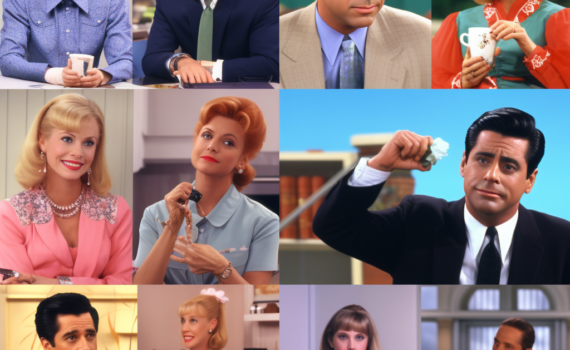
Good day, dear reader! It’s Percival Q. Higginbottom, your seasoned guide through the quirks of this wonderfully weird world. Today, we’re strolling down the laughter lane, revisiting the rich, chuckle-inducing history of television sitcom humor. Humor is the spice of life, they say, and the recipe has certainly evolved over the years. In the realm of sitcoms, this progression has been particularly fascinating. Let’s wind the clock back to the 1950s. Ah, the “Golden Age of Television”! This was when sitcoms like “I Love Lucy” and “The Honeymooners” reigned supreme. The humor was largely based on slapstick comedy and funny misunderstandings. Ah, the sheer joy of seeing Lucy get herself into one comical pickle after another! Fast-forward to the 70s, and the laugh track has shifted. Shows like “All in the Family” and “MAS*H” broke new ground, exploring societal issues and darker themes with a comedic touch. Oh, and let’s […]
laughter
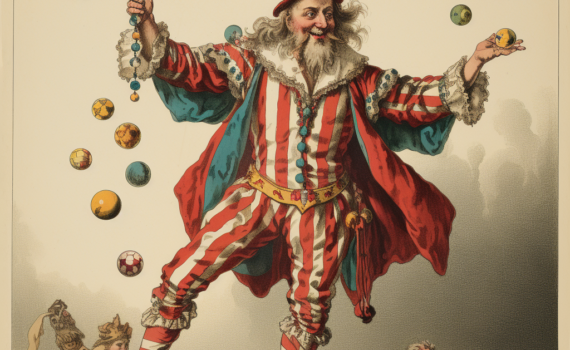
Ah, dear reader, join me today in the opulent halls of yesteryears’ courts, as we tip our jester’s hat to the historical conduits of laughter – the jesters! An essential figure in the regal courts from ancient Rome to medieval Europe, the jester is a character steeped in wit, satire, and a much-needed sense of humor. The jester, or the court fool, occupied an interesting niche in the societal structures of yore. They served as both entertainers and subtle social commentators. Their outlandish attire, marked by motley clothes, a fool’s cap, and a mock scepter, was as emblematic as their role – they were the sanctioned courtly clowns. While laughter was their primary trade, jesters held a unique position that allowed them to tread the delicate line of truth and satire. Wrapped in humor, jesters often delivered bitter truths, criticisms, and political commentary that others in the court dared not […]

Gather ’round, my fellow seekers of the humorous and unexpected, as we dive headfirst into the exhilarating, sometimes chaotic, and always entertaining world of improv comedy. Improv, short for improvisational theater, is a form of live theater where the plot, characters, and dialogue are created spontaneously in the moment, often guided by audience suggestions. One could argue that it’s comedy in its purest form, driven by a unique blend of quick thinking, teamwork, and a hefty dose of audacity. The origins of improv trace back to the Atellan Farce of ancient Roman times, where actors created scenes based on stock characters and plotlines. But the birth of modern improv can largely be credited to a woman named Viola Spolin. In the mid-20th century, she developed theater games to help actors develop spontaneity, creativity, and collaboration – principles that remain at the heart of improv today. Her son, Paul Sills, went […]
There’s a rather popular saying that goes, “Comedy is tragedy plus time.” In a way, it encapsulates the inherent dichotomy of humor, the way it can convert life’s most awkward, painful, or bizarre moments into a source of amusement. It’s a fascinating realm to delve into, a labyrinth of laughter and amusement, filled with the echoes of shared human experiences. The greatest comedians are, in essence, artists, wielding a paintbrush dipped in hues of humor and wit. But instead of creating static images on a canvas, they sketch vibrant vignettes of life, capturing our follies, hopes, and ironies, in ways that allow us to laugh at our collective vulnerabilities. They are masters of observation, unmasking the ordinary, the overlooked, and the underappreciated to reveal their comic potential. Consider the realm of stand-up comedy, where the comedian stands alone on stage, armed only with their wits and a microphone. Their job […]

Greetings, dear reader, Laughter, they say, is the best medicine. Yet, have we ever stopped to wonder about this ubiquitous part of our lives? Have we contemplated the hows and whys of our giggles, our chuckles, and our uproarious bouts of belly laughter? Today, I invite you to join me on a voyage of discovery into this fascinating facet of human behavior, as we attempt to decode the psychology of laughter. Humans are social creatures. We thrive on connection, communication, and mutual understanding. Laughter acts as a potent, yet often overlooked, glue in this social fabric. In fact, researchers have found that we are 30 times more likely to laugh in social settings than when we are alone. This suggests a profound role for laughter in our social interactions, a role that transcends mere expression of humor. From an evolutionary standpoint, laughter may have been a mechanism for signaling safety […]
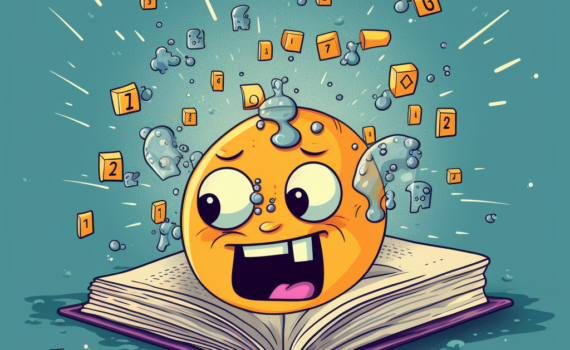
Hello, dear readers! Today, I thought we could take a break from our usual explorations into the profound and instead venture into the profoundly amusing. Mathematics, a field typically associated with serious thought and rigorous logic, might seem an odd choice for a lighthearted jaunt. However, if we delve just a bit deeper, we find it to be a surprisingly rich source of humor and wit. So, get ready to chuckle, chortle, and perhaps even guffaw as we delve into the hilarious world of mathematical humor. Firstly, let us start with some mathematical puns. One of my all-time favorites is, “Why was the math book sad? Because it had too many problems.” Yes, a simple play on words but deliciously delightful. Or consider this gem: “Why should you never talk to Pi? Because he’s irrational and never ends.” Ah, the beauty of a well-placed math joke, it really adds up […]

Ah, dad jokes. Those puns and one-liners so painfully corny they make us groan, roll our eyes, and, against all odds, chuckle. They have their own unique charm and wit, don’t they? And as Percival, a lover of humor in all its forms, I am here today to sing their praises and delve into the fascinating world of dad jokes. To truly appreciate dad jokes, we must first understand their nature. They are humor in its simplest form: puns, wordplay, and harmless, light-hearted ribbing. Most importantly, dad jokes are accessible, designed to elicit a smile from everyone within earshot, be they eight or eighty. For instance, consider the classic: “Why don’t scientists trust atoms?” The answer? “Because they make up everything!” An eye roll? A groan? Perhaps a reluctant smile? That’s the dad joke effect. Dad jokes, despite their reputation for being somewhat cringe-inducing, have a peculiar power. They foster […]