
Greetings, dear reader, Laughter, they say, is the best medicine. Yet, have we ever stopped to wonder about this ubiquitous part of our lives? Have we contemplated the hows and whys of our giggles, our chuckles, and our uproarious bouts of belly laughter? Today, I invite you to join me on a voyage of discovery into this fascinating facet of human behavior, as we attempt to decode the psychology of laughter. Humans are social creatures. We thrive on connection, communication, and mutual understanding. Laughter acts as a potent, yet often overlooked, glue in this social fabric. In fact, researchers have found that we are 30 times more likely to laugh in social settings than when we are alone. This suggests a profound role for laughter in our social interactions, a role that transcends mere expression of humor. From an evolutionary standpoint, laughter may have been a mechanism for signaling safety […]
Human Connection

Ah, dad jokes. Those puns and one-liners so painfully corny they make us groan, roll our eyes, and, against all odds, chuckle. They have their own unique charm and wit, don’t they? And as Percival, a lover of humor in all its forms, I am here today to sing their praises and delve into the fascinating world of dad jokes. To truly appreciate dad jokes, we must first understand their nature. They are humor in its simplest form: puns, wordplay, and harmless, light-hearted ribbing. Most importantly, dad jokes are accessible, designed to elicit a smile from everyone within earshot, be they eight or eighty. For instance, consider the classic: “Why don’t scientists trust atoms?” The answer? “Because they make up everything!” An eye roll? A groan? Perhaps a reluctant smile? That’s the dad joke effect. Dad jokes, despite their reputation for being somewhat cringe-inducing, have a peculiar power. They foster […]
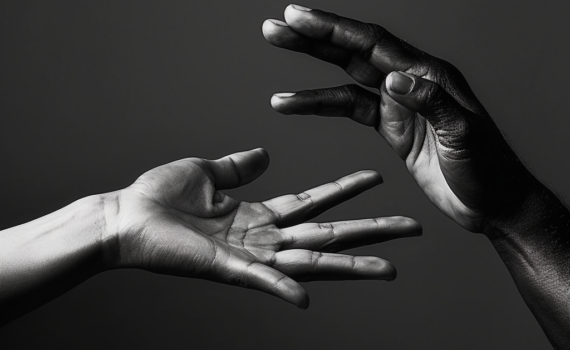
Ah, dear reader! Once again, we find ourselves poised on the precipice of a journey into the intriguing labyrinth of the human mind. Today, let us tread lightly into the realm of empathy, a faculty often considered to be the touchstone of our shared humanity. Empathy, in its simplest definition, is our ability to understand and share the feelings of another. It is the invisible thread that binds us together, a silent whisper echoing the emotions of those around us. But is it an inherent characteristic of being human, or is it something we learn? The debate among scholars rages on, but one thing is certain: empathy is not exclusive to us humans. Many species in the animal kingdom have shown evidence of empathetic behaviour. A mother elephant, for instance, mourns the loss of her calf. A pack of wolves shares the joy of a successful hunt. Even rats have […]