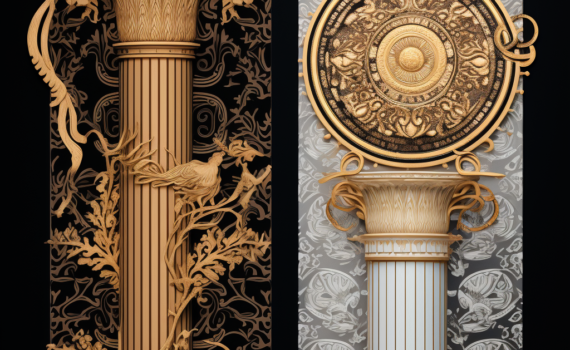
Greetings, dear readers! It’s your inquisitive friend, Percival Q. Higginbottom, once again diving headlong into the deep and enthralling world of ideas. Today, we shall embark upon a thought-provoking expedition through the terrains of Eastern and Western philosophy, uncovering the contrasts and confluences that have shaped two of the world’s most captivating intellectual traditions. Eastern Philosophy: A Tapestry of Harmony The Eastern philosophical domain, primarily encompassing the traditions of China, India, Japan, and Korea, is often described as a harmonious tapestry woven with threads of interconnectedness and balance. Confucianism, Taoism, Buddhism, and Hinduism, among others, find their roots in this rich soil. One of the defining characteristics of Eastern philosophy is the focus on the interconnectedness of all things. Harmony and balance are sought within the individual, the community, and the cosmos. Concepts such as yin and yang, dharma, and karma elucidate a worldview where opposites coexist and interrelate, creating […]
Balance

Ah, the digital age! What an era to be alive in, my dear reader. From a palm-sized device, I can chat with a friend in Timbuktu, purchase an alpaca sweater from Peru, and browse the digital rendition of the Louvre — all whilst sipping a cup of exquisite Ethiopian coffee in my humble abode. But recently, I dared to do the unthinkable: I decided to embark on a digital detox. Gasp! Yes, you read that right. No emails, no social media, no online shopping, not even a teeny-weeny peek at the weather app. It was just me, my thoughts, and the tangible world around me. Call it madness or call it courageous, I was up for the challenge. The first few days were, to put it mildly, peculiar. I felt like a ship adrift at sea, disconnected from the flurry of digital notifications that typically dictated my day. My hands […]
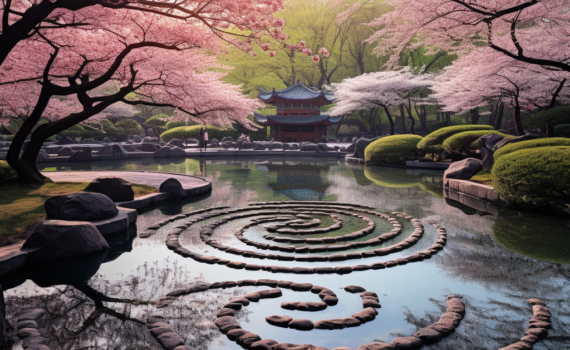
Dearest readers, Today, I invite you to embark upon a meandering journey through the tranquil pathways of Taoism, an ancient philosophy originating from the mystic lands of China. The tapestry of Taoism is interwoven with wisdom, spirituality, and a yearning to dwell harmoniously within the ebbs and flows of the universe. The word ‘Tao’ (pronounced Dao) can be roughly translated to mean ‘the way’ or ‘the path,’ and in Taoism, it signifies the underlying essence of all that is. The foundational text of Taoism is the Tao Te Ching, attributed to the enigmatic sage Laozi, believed to have lived in the 6th century BCE. The text, composed of a mere 81 short chapters, is akin to a beguiling stream of wisdom that babbles with paradoxes and poetic imagery. The Tao Te Ching’s pages exude an insurmountable depth, enticing the soul to dive into its tranquil waters. One of the most […]

Greetings, my discerning friends, In our constant pursuit of knowledge and understanding, we often find ourselves focusing on the tangible, the concrete, the visible. The lines and colors, the strokes and textures, these are the elements that catch our attention when we stand before a piece of art. But today, let’s shift our perspective and embrace the intangible, the unseen, the void. Today, let’s delve into the world of ‘negative space’. Negative space, in art, refers to the area around and between the subject of an image. Often overlooked, it is the silent partner to the object, or positive space, in the dance of composition. It may seem counterintuitive, but the space that is ’empty’ is as crucial as the space that is filled. Why, you may ask? Because the negative space defines and enhances the positive space. It shapes the object, provides context, guides our eyes, and creates balance. […]